On Cameron Winter

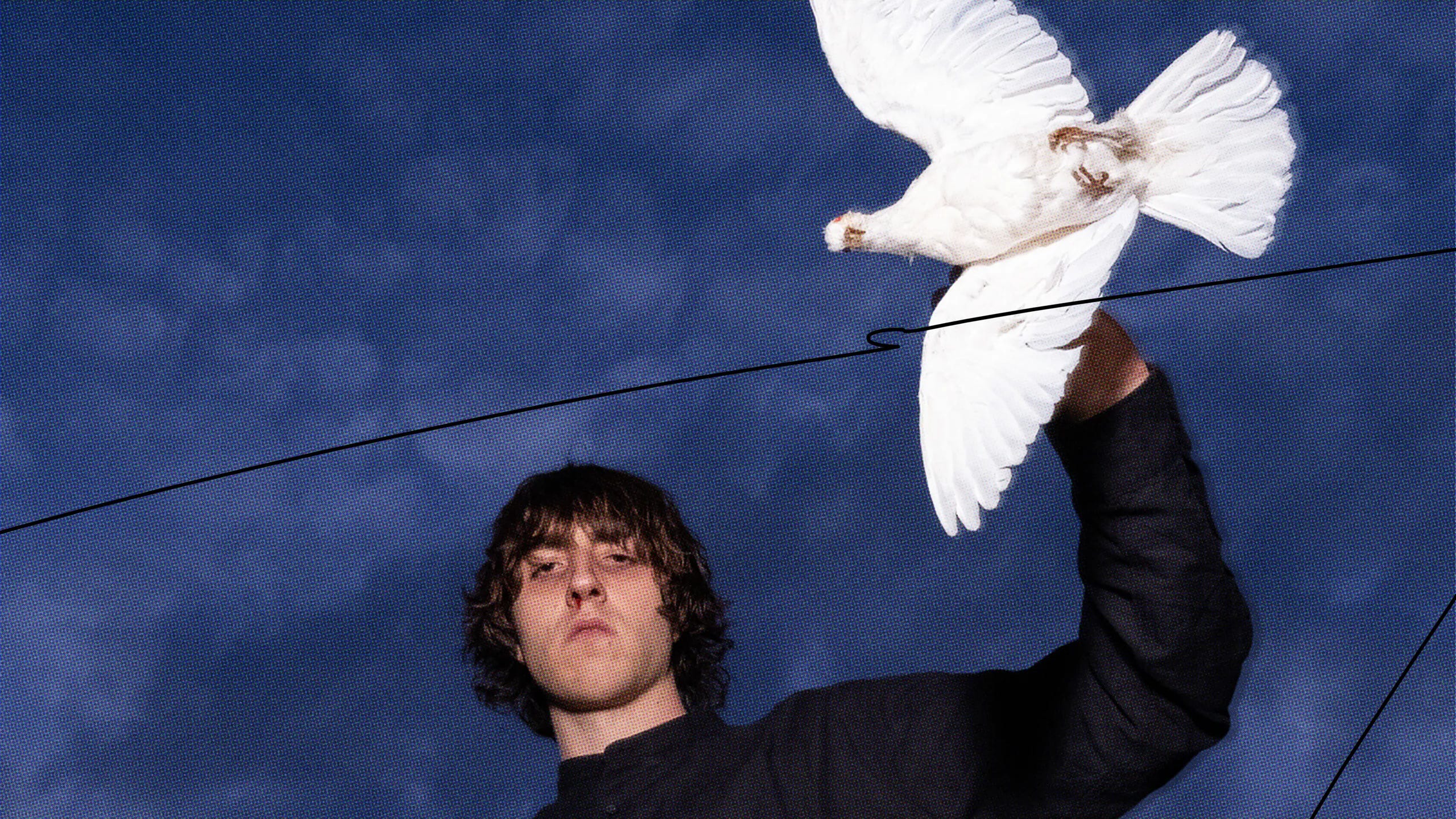
It’s not often you see an artist — especially one as young as Cameron Winter — come into the world fully formed. Some take years to discover their sound, some range across genres without ever finding the right fit, some resort to lazy pastiche (see: Greta Van Fleet). Musical prodigy is rare, discernment and taste even more so.
Winter has it all, which is why he’s enjoying a deserved breakout year. The 23-year-old Brooklyn native is the frontman of the indie rock band Geese, whose third album, Getting Killed, was released in September to near-universal critical acclaim. That came on the heels of his debut, Heavy Metal, which, despite dropping quietly late last year, has made its way onto several 2025 best-of lists. But that brief CV undersells his cultural ubiquity. He’s already made the rounds on late night shows. Now here he is, selling out Carnegie Hall, where he filmed a video with Paul Thomas Anderson and Josh Safdie. Jump-cut to him just a week ago, posing alongside New Wave icon Debbie Harry for the cover of New York Magazine’s annual “Reasons to Love New York” issue (the band also got a flattering writeup in the magazine). Celebrities like Maya Rudolph and Cillian Murphy sing his praises.
A cynic might look at all that breathless adulation and begin to suspect this popularity is being manufactured, the overnight celebrity merely the product of an industry eager to mint a new star. But Winter actually has the goods. The natural place to start is that voice: a ragged, soulful baritone, equal parts Rufus Wainwright and Eeyore from Winnie the Pooh. When he lets it rip, he reminds me of Alec Ounsworth from Clap Your Hands Say Yeah, the blogosphere darlings of the mid-aughts, whose distinctive squawk infused all of his off-kilter melodies with pathos and genuine feeling.
Unlike some of his musical forebears, though, Winter’s an oddball savant, a good-natured prankster, capable of writing memorable lyrics that walk the knife’s edge between beauty and abstraction. Take the chorus from “Au Pays du Cocaine,” one of my favorites off Getting Killed:
Like a sailor in a big green boat
Like a sailor in a big green coat
You can be free
You can be free, just come home
The opening lines offer up a coy misdirection. There’s a childlike innocence in the repetition, the simple adjectives, the rhyme of “coat” and “boat.” Then we move into more adult territory. Anyone who’s been on the wrong end of an unrequited love will recognize that doomed plea — You can be free, just come home. It’s the illusion that you can still dictate the terms of a relationship already slipping away, that you can bargain your way back into someone’s heart.
Heavy Metal, Winter’s solo project, is also built around a sleight of hand. The title promises, well, heavy metal, but instead we get a succession of downtempo, piano-heavy songs, punctuated by gentle percussion or lugubrious horns. By the time we reach “Cancer of the Skull,” a mid-album cut that sounds like it was recorded in the middle of a swamp, we finally get to the punchline: “I am full of heavy metal,” warbles Winter over a whispery guitar. “I am the heavy metal man.” Metallica this is not.
To the extent the album produced a radio-friendly hit, it was the third track, “Love Takes Miles.” Pitchfork named it their number one song of the year; it was briefly discussed as a long-shot Grammy contender. Winter’s falsetto floats over a warm swirl of synths and piano as the song picks up steam. The imagery is spare, affecting (“Love will make you fit it all in the car”), but the melody, to me at least, is too saccharine.
The song that precedes it, though, is the real showstopper. If I owned this record on vinyl, I would have long since worn out the groove. “Nausicaä (Love Will Be Revealed),” is not only cryptic and allusive — is it about the character from The Odyssey, the beloved ‘80s anime film, or both? — it’s also a vocal and lyrical showcase.
Winter begins in a breathy whisper:
Nausicaä, I
I wanna know
Tell me how it feels
Nausicaä, Nausicaä
I wanna know you
To know, and be known. To slip the skin, feel what someone else is feeling. Love, in other words, without the gooey appellation. This is Winter at his most tender —though, inveterate jokester that he is, he can’t resist undercutting it later (“I am blind/And you are ugly/It’s so easy to want you”). And when love does come, it arrives in the future tense: “Love will be revealed.” He delivers that line like he’s undergoing an exorcism.
Of course, not every line lends itself to easy interpretation. With Winter, it never does. But it doesn’t matter: when the harmonies break in, you’re swept along on a tide of emotion. The voice gets looser, more unbounded. By the time the piece reaches its coda, he is practically screaming. The orchestral blend of piano, woodwinds, bass, and drum layer atop one another, swelling toward a crescendo, and keep building, like a wave refusing to break. Then, mid-measure, it ends.
I’ve tried, for the past few months, to understand the alchemy behind this song, why every time I listen seems like the first time. At some point, though, it feels like trying to dissect genius. You can only peel back the layers so far. In the final telling, it just is. Which is enough.